3 hr 30 min
Moorea Whale Swim & Lagoon Snorkel – Small Group Boat Tour
- Expert local guide
- Small group
- Skip-the-line access
- Free cancellation
Moorea Snorkeling with Humpback Whales — In-Water Encounters
Migrate alongside forty-ton mammals, descend into song
Compare fares, pick the fit — all bookings are mobile-voucher and eligible for free cancellation where shown.
3 hr 30 min
6 hr
4 hr
Selecting the right moorea snorkeling with humpback whales option depends on whether you wish to actively swim alongside marine giants or prefer surface observation from the boat. These specialized moorea snorkeling with humpback whales tours provide intimate access to French Polynesia's protected cetacean sanctuary.
| Observation Only Surface watching from boat |
Top pick Swimmer & Snorkeler In-water guided encounter |
|
|---|---|---|
| In-water access | — | |
| Group size limit | 12 passengers max | 6 swimmers max |
| Duration | 3 to 4 hours | 3 to 4 hours |
| Gear included | Life vest included | Mask, fins, snorkel included |
| Activity focus | Whale watching | Snorkeling with whales |
| Best for | Non-swimmers | Confident swimmers |
| See tickets & prices |
Verdict: For the safest and most immersive experience, secure your moorea snorkeling with humpback whales tickets as a swimmer to enjoy guided in-water encounters.
Worth it for whale-season visitors seeking wildlife encounters
Moorea snorkeling with humpback whales delivers one of French Polynesia's most sought-after marine experiences during the July–October migration window. Tours departing between 07:00–09:45 maximize calm conditions for spotting and swimming alongside migrating whales in open ocean, with professional guides enforcing respectful distance protocols. The Humpback Whale Swimming Experience targets dedicated cetacean encounters, while combined options like the Whale Swim & Lagoon Snorkel add reef exploration for broader value. No ocean entry fee applies—costs reflect operator logistics, permits, and small-group access. Swimming with humpbacks requires moderate fitness and comfort in deep water; sightings depend on animal behavior and weather, making this a high-reward but variable experience. For travelers visiting Moorea outside whale season or prioritizing guaranteed coral-reef snorkeling, lagoon-focused alternatives offer consistent marine life at lower price points.
Bottom line: Book moorea snorkeling with humpback whales tours if you're visiting during migration season and value rare wildlife encounters over guaranteed reef-only snorkeling.
These experiences offer distinct marine encounters; most visitors find that moorea snorkeling with humpback whales provides a more intimate connection with migratory giants, whereas lagoon excursions offer predictable sightings of local reef inhabitants.
|
Top pick Humpback Whale Swimming |
Lagoon Shark/Ray Tours | |
|---|---|---|
| Target Species | Humpback Whales | Blacktip Reef Sharks and Stingrays |
| Skill Level Required | Intermediate (Open Ocean) | Beginner (Calm Lagoon) |
| Boat Size | Small RIB/Zodiac | Medium Outrigger/Pontoon |
| Nature of Interaction | Non-invasive observation | Direct interaction permitted |
| Duration | 4–6 hours | 3–4 hours |
| Primary Focus | Migratory wildlife observation | Tropical lagoon ecosystem exploration |
| See tickets & prices |
Verdict: Choose the moorea snorkeling with humpback whales tour if you prioritize rare megafauna encounters, or select lagoon moorea snorkeling with humpback whales tours for a relaxed, family-friendly outing with high animal density.
Hand-picked experiences loved by thousands of travelers
4 hours
Free Cancellation
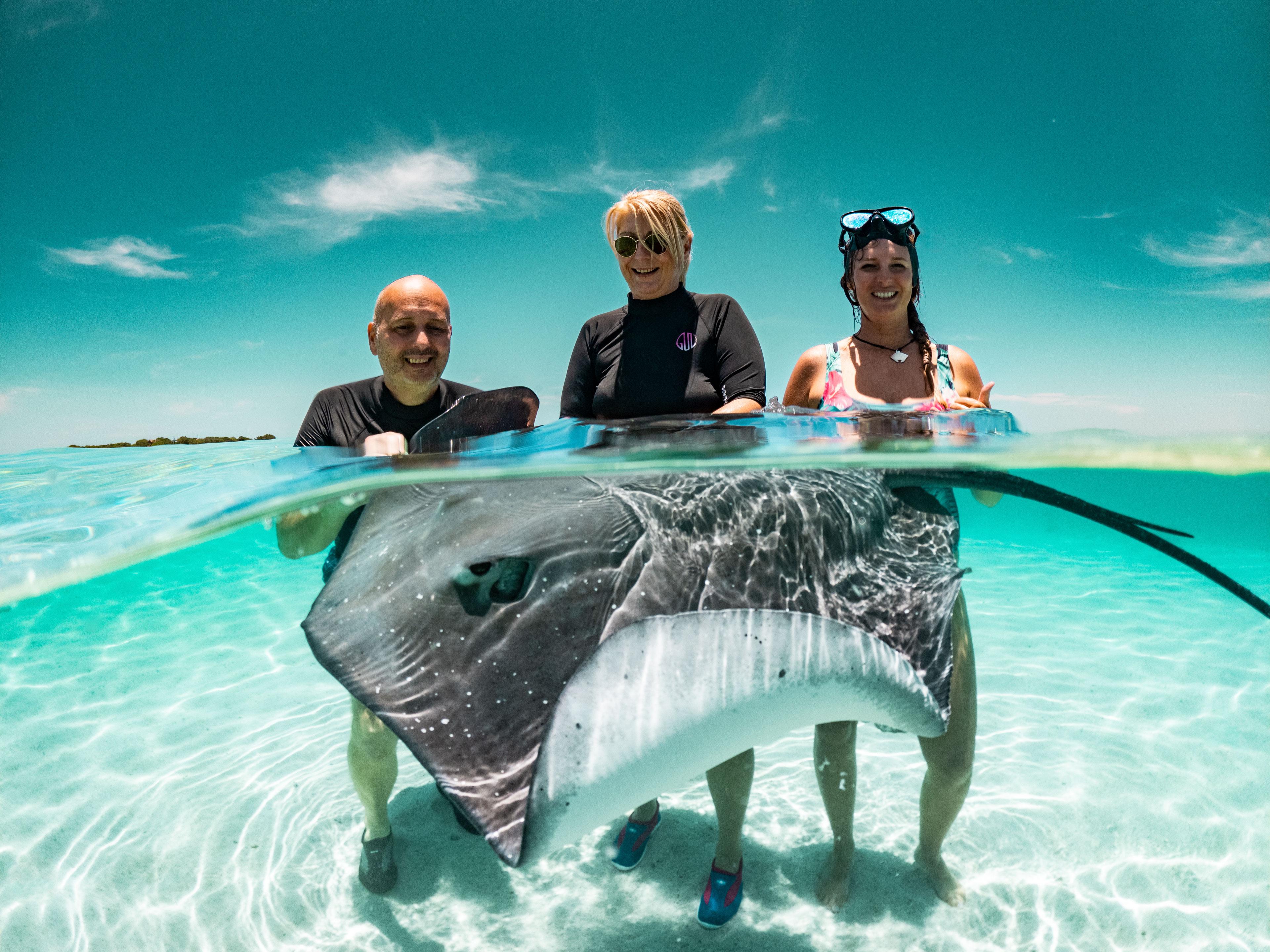
Encounter humpback whales in French Polynesian waters with optional in-water swimming adventures
4 hours
Free Cancellation
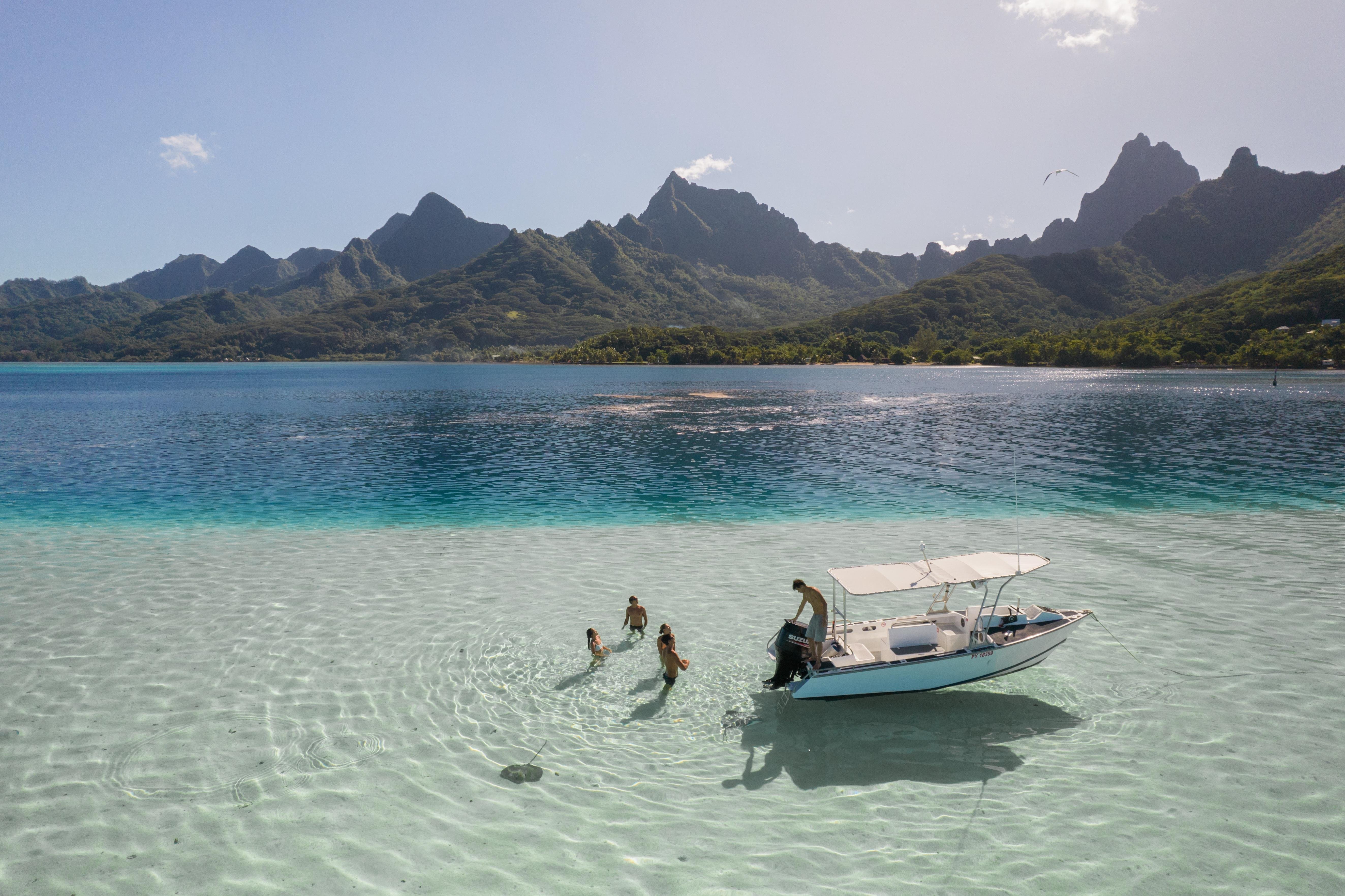
Swim with rays and turtles, explore coral gardens, and unwind on a remote sandbar in Moorea's turquoise waters
3 hours
Free Cancellation
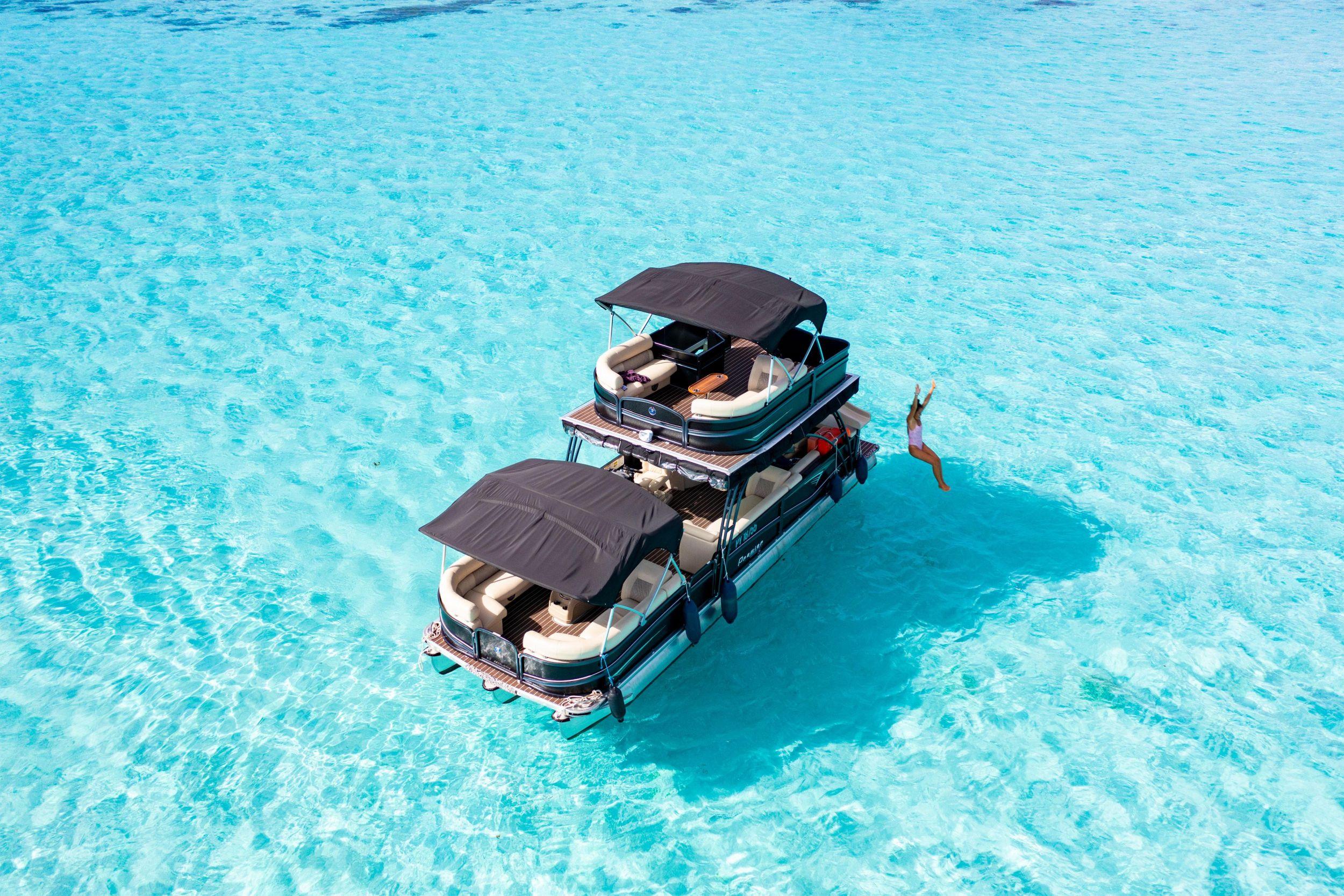
Swim with stingrays and reef sharks, explore vibrant coral gardens, and relax aboard a luxury boat
4 hours
Free Cancellation
Explore Moorea's underwater world with rays, sharks, dolphins, and turtles on this intimate half-day excursion
6 hours
Free Cancellation
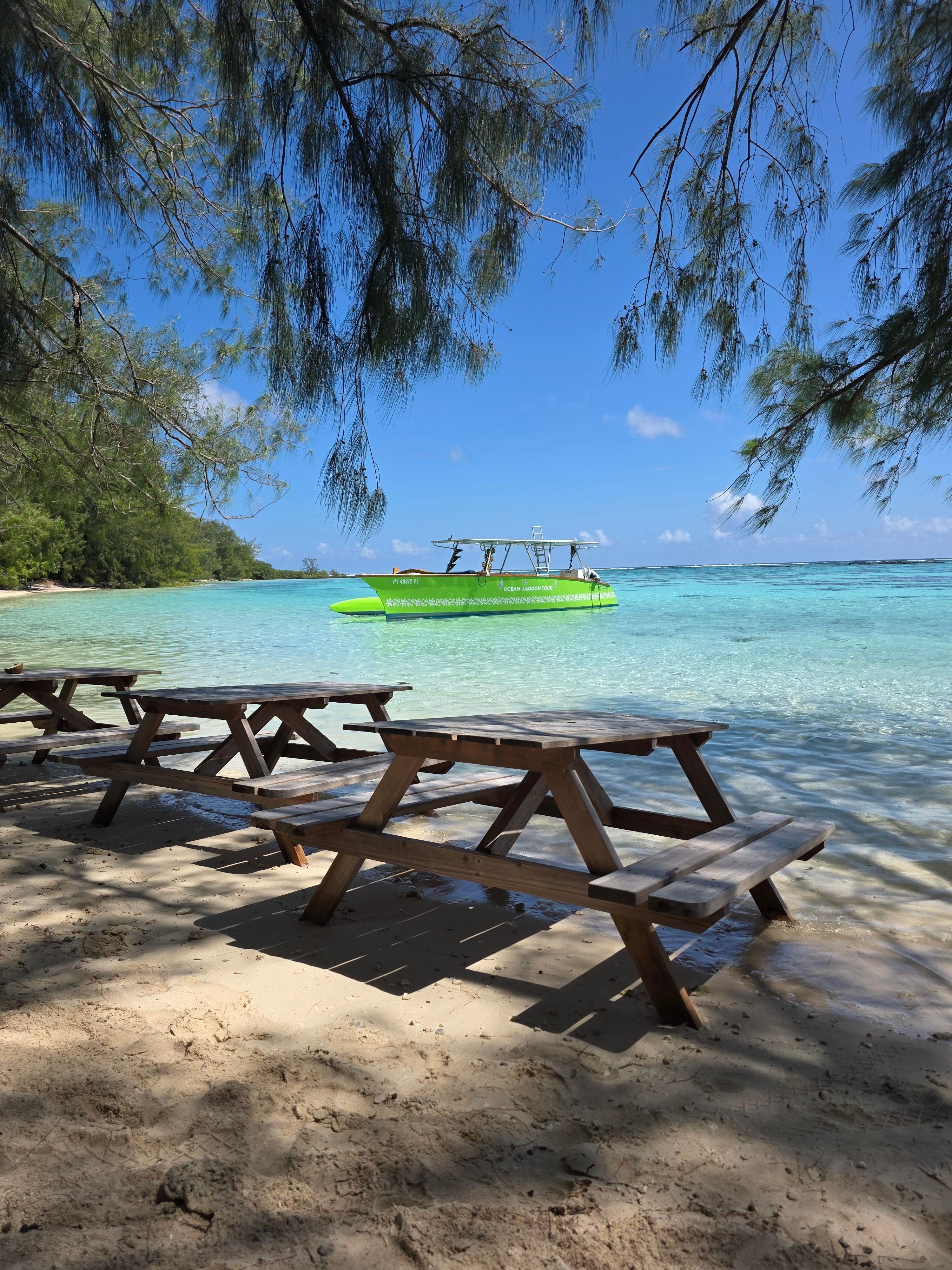
Paddle through turquoise waters, snorkel with marine life, and savor a beachside BBQ on a private motu.
5 hours
Free Cancellation
Search for migrating humpback whales off Tahiti's coast with certified guides on this intimate marine adventure
3 hours
Free Cancellation
Swim with rays and reef sharks, master poisson cru, and explore coral gardens on this intimate lagoon adventure
4 hours
Free Cancellation
Sail Moorea's pristine waters for an intimate encounter with migrating humpback whales during their annual journey.
Safety briefing and equipment fitting
Navigation to offshore whale sightings
Guided swimming and observation session
Debrief and return to harbor
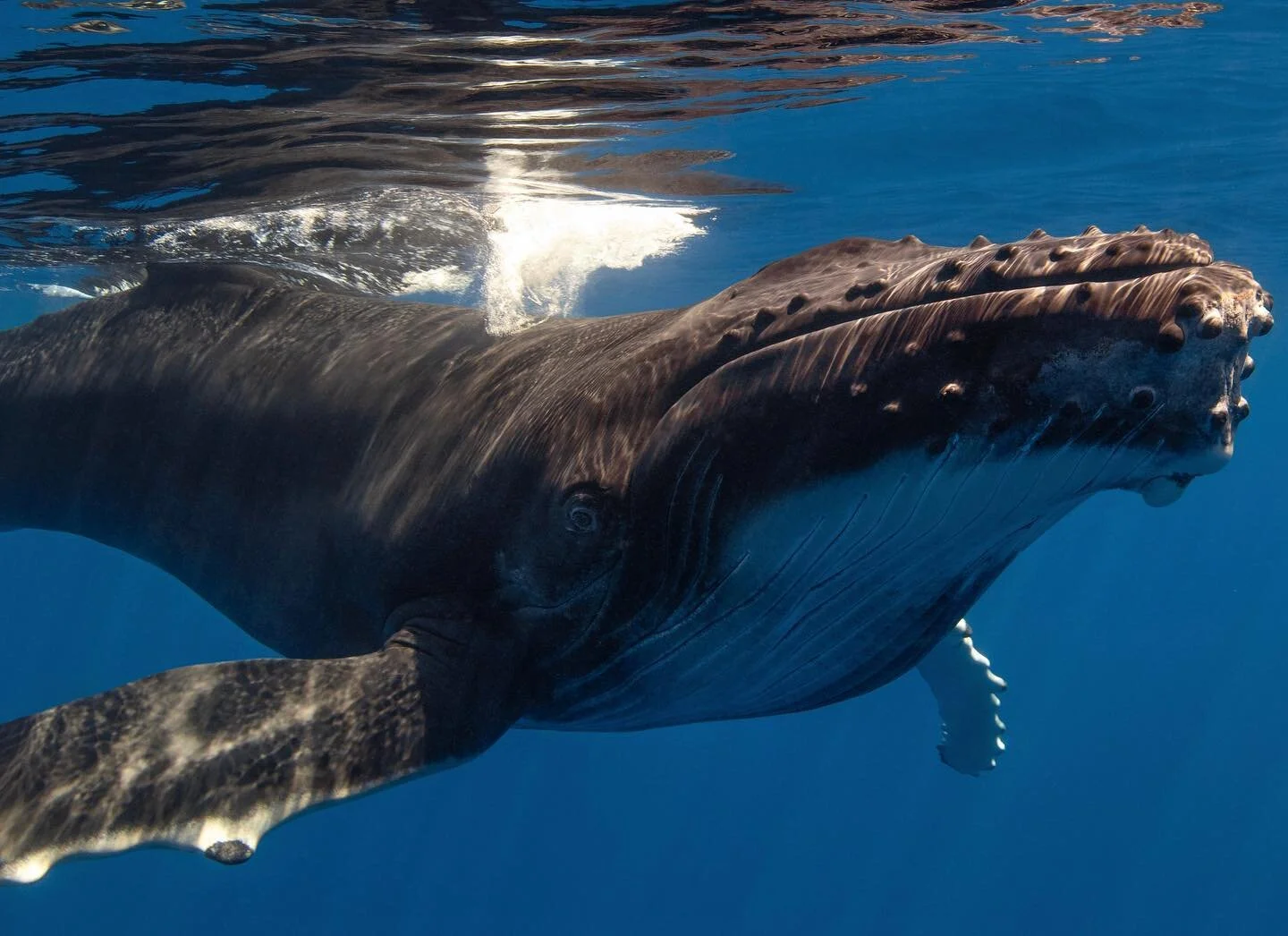
Observe majestic humpbacks in their natural breeding grounds during the late austral winter and spring.
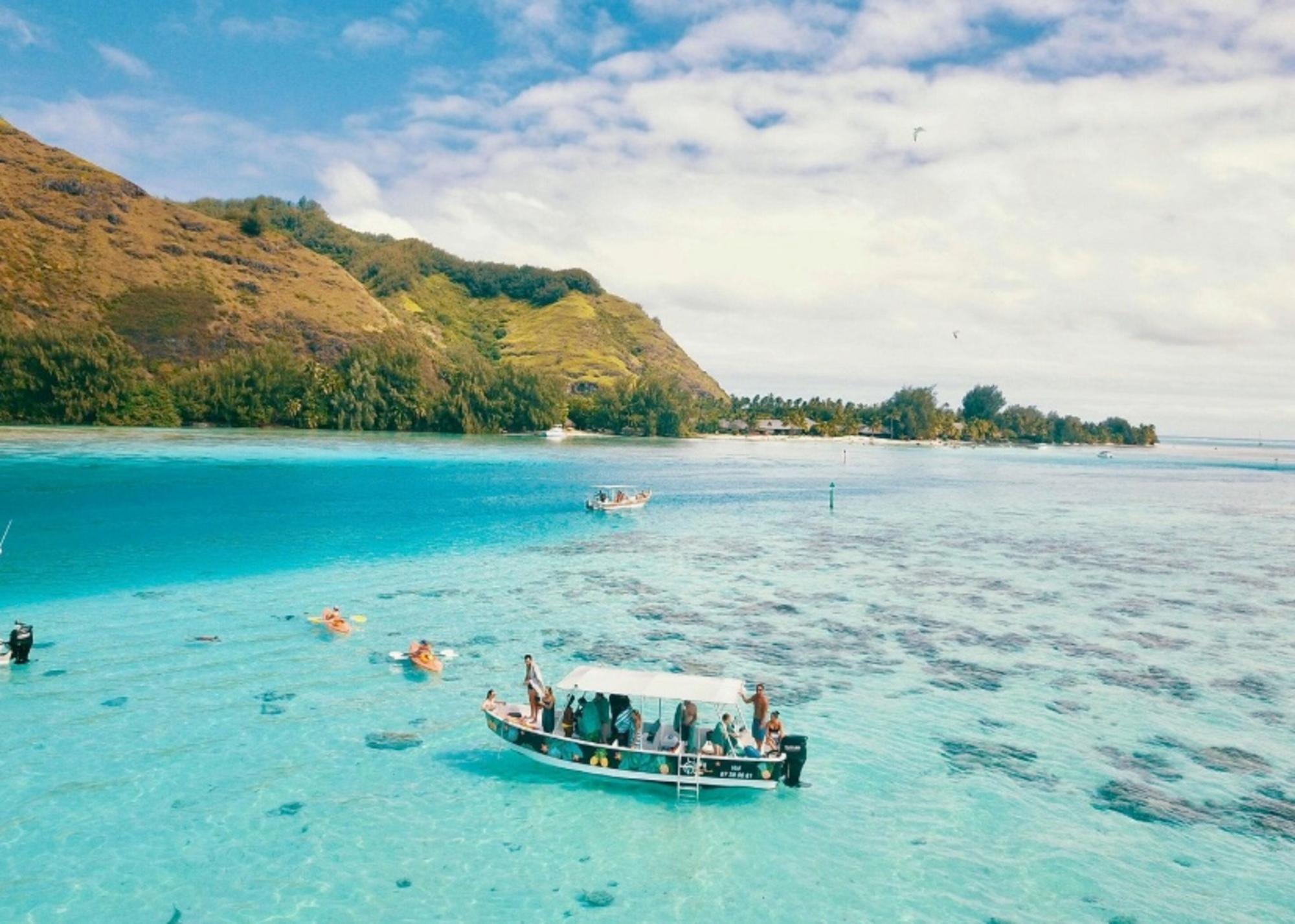
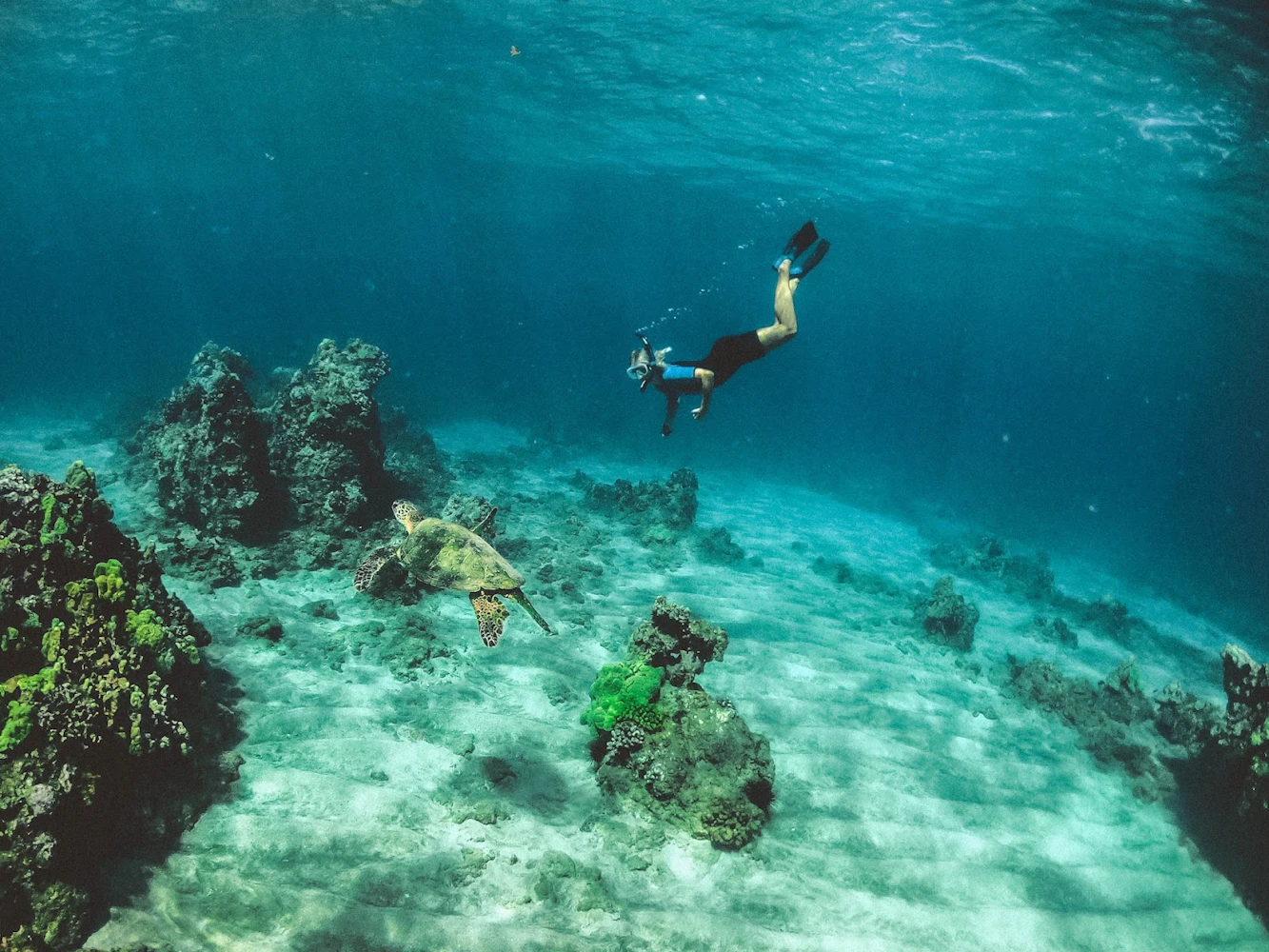
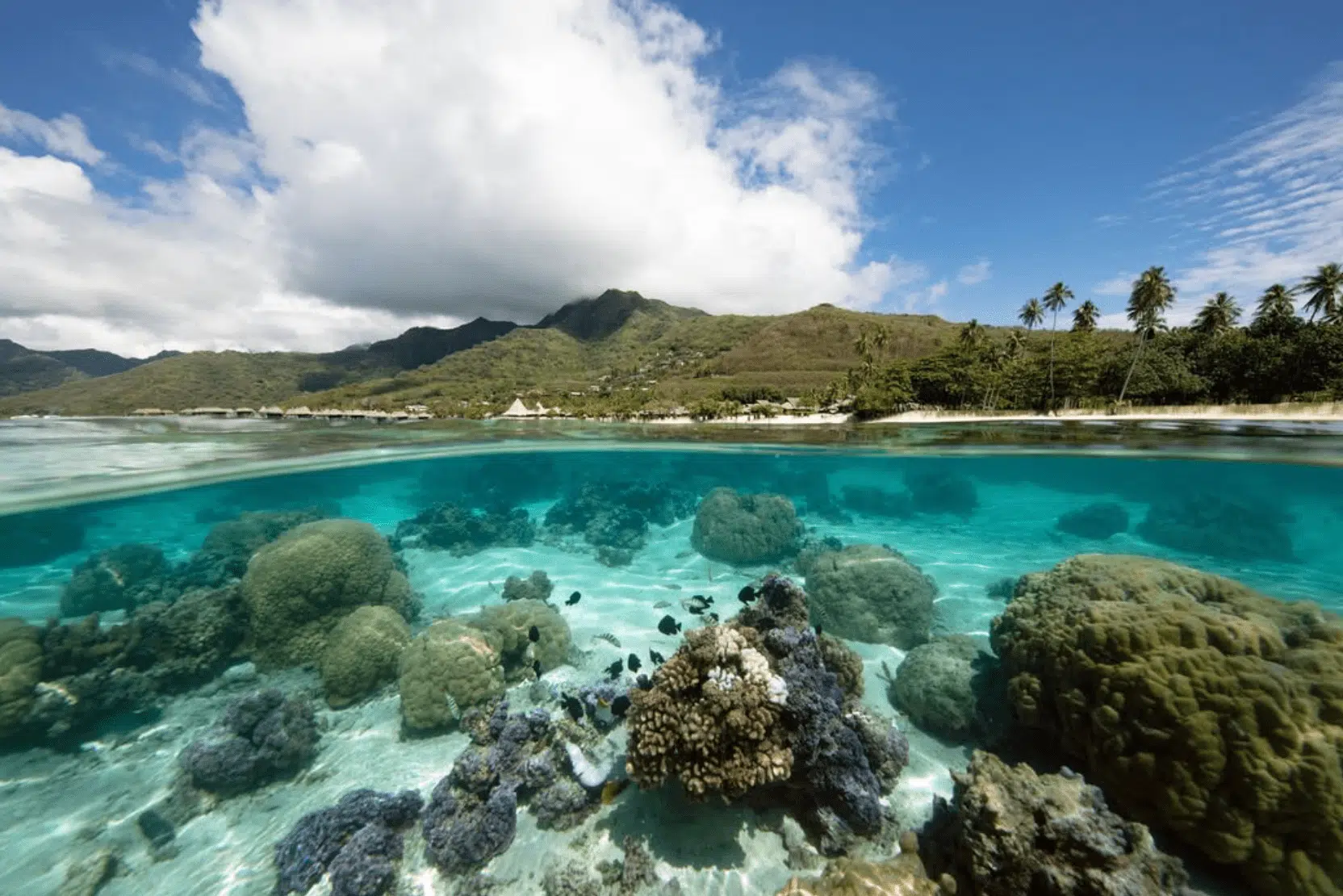
Explore the vibrant biodiversity of the Moorea lagoon before heading into the deeper blue.
Spot dolphins, sharks, and rays that often share the waters with whales.
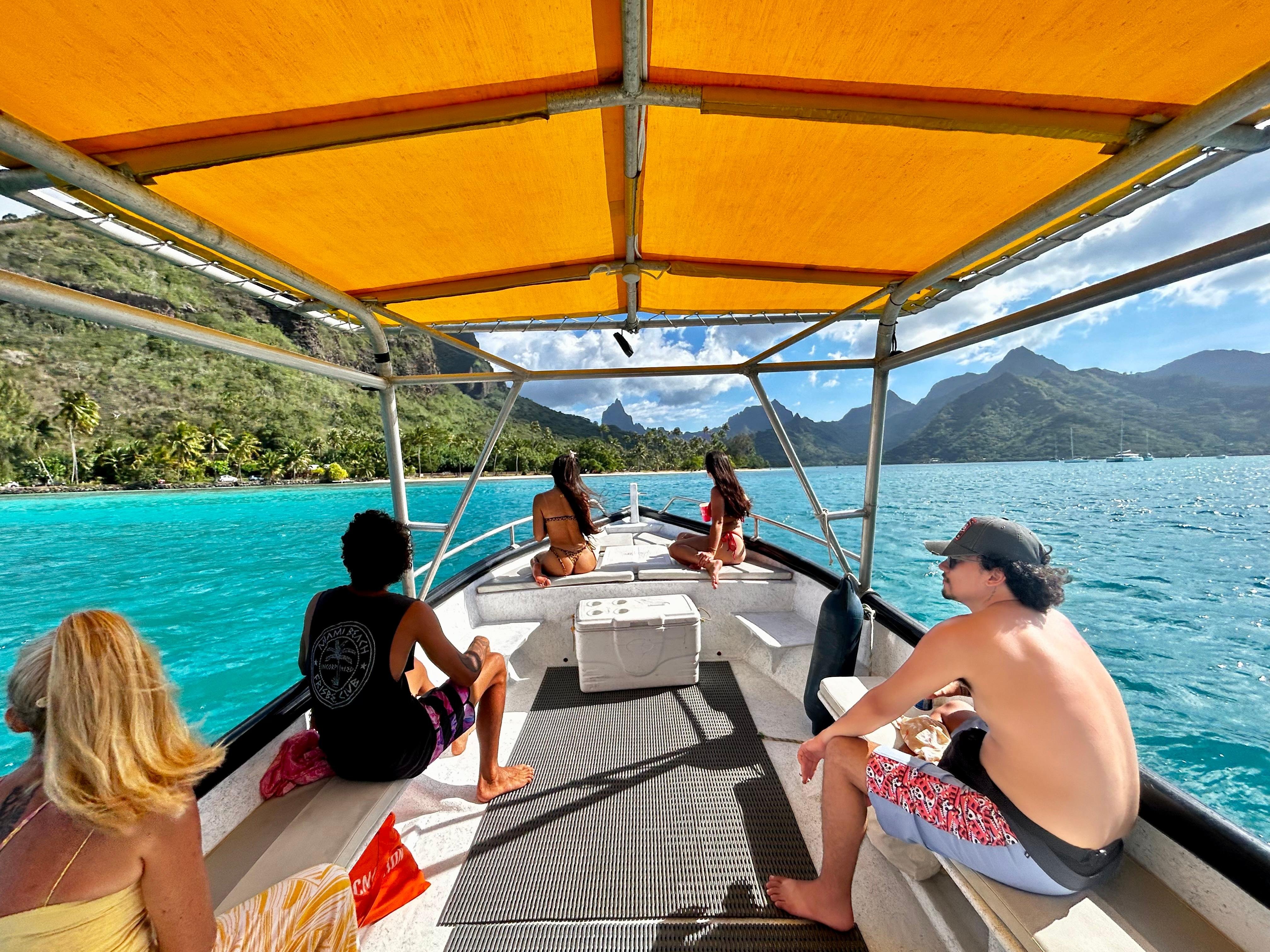
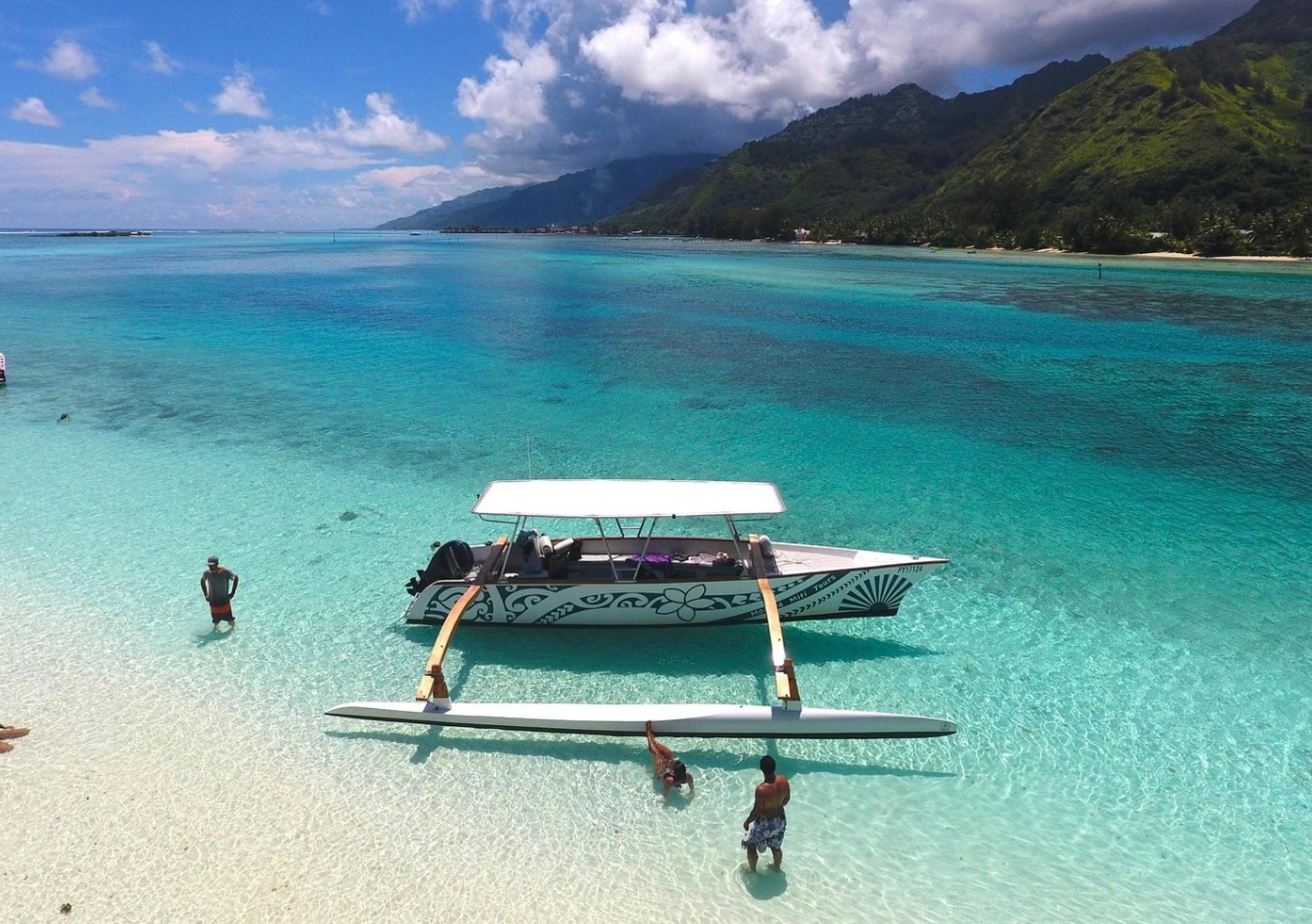
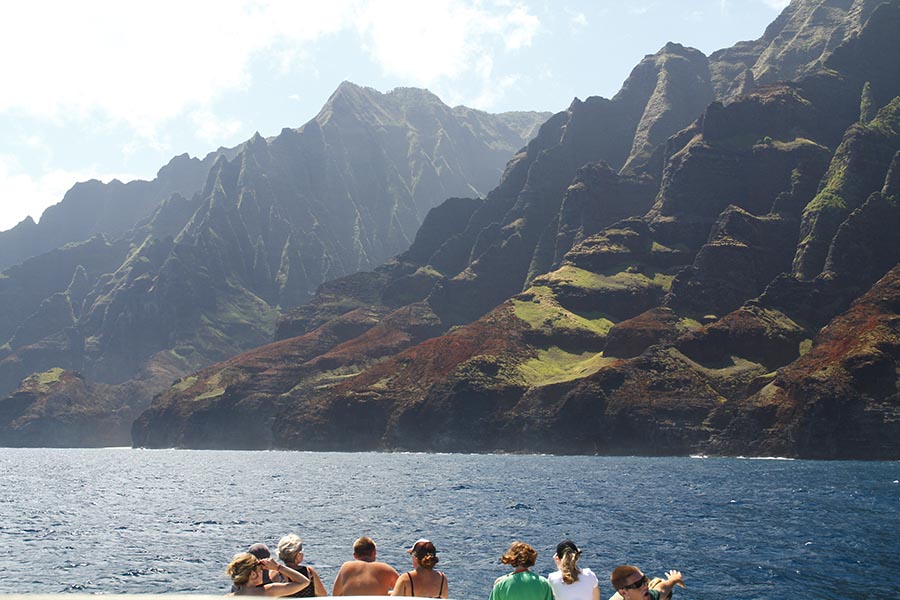
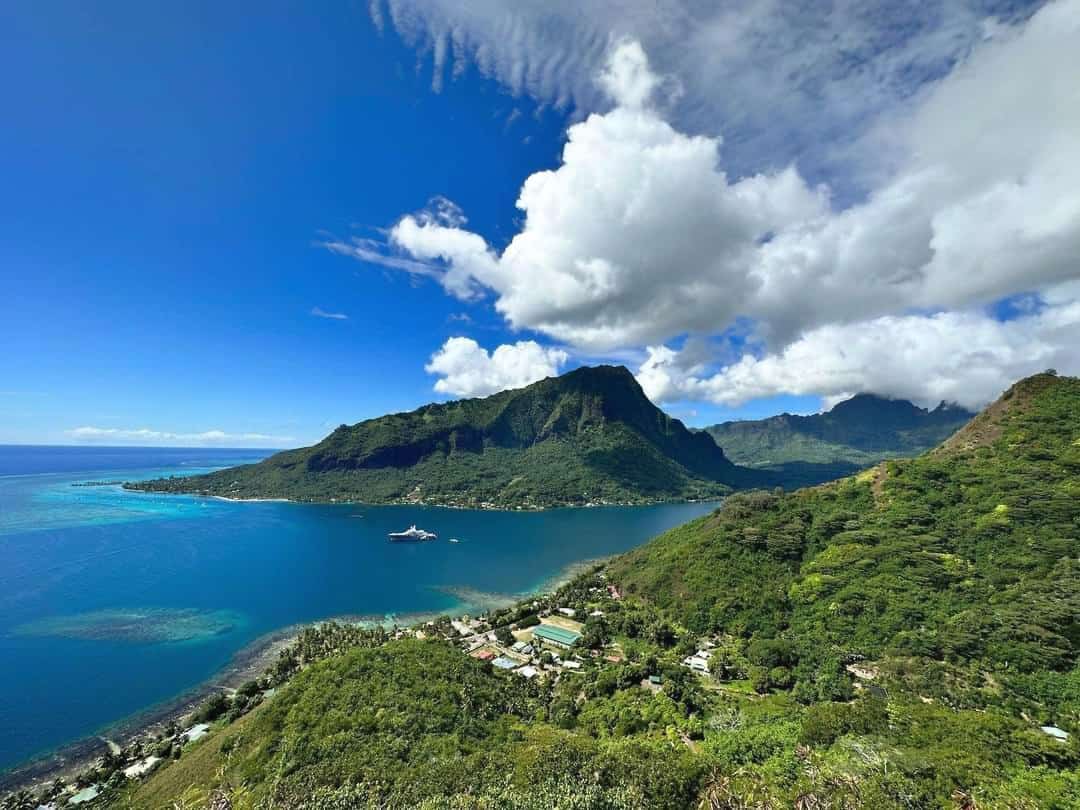
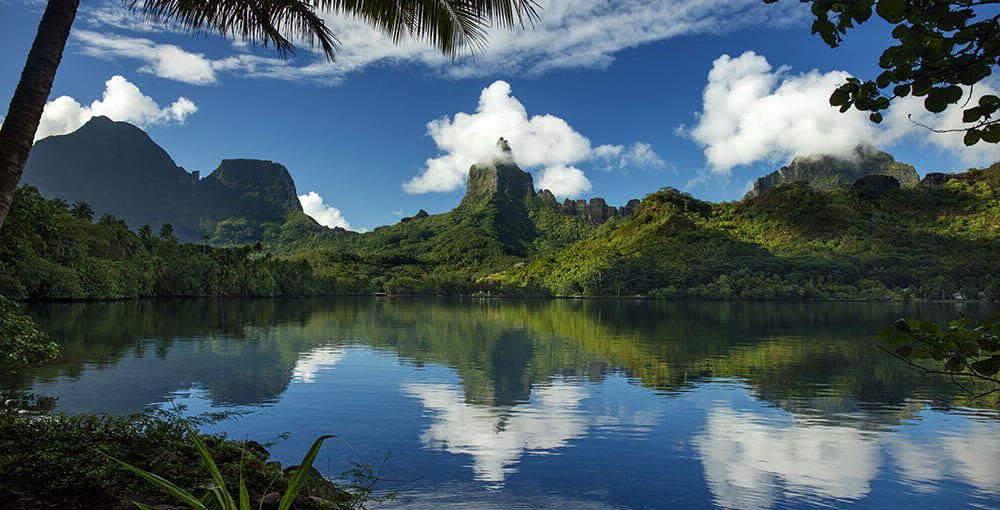
Enjoy dramatic mountain scenery from the water while searching for whales.
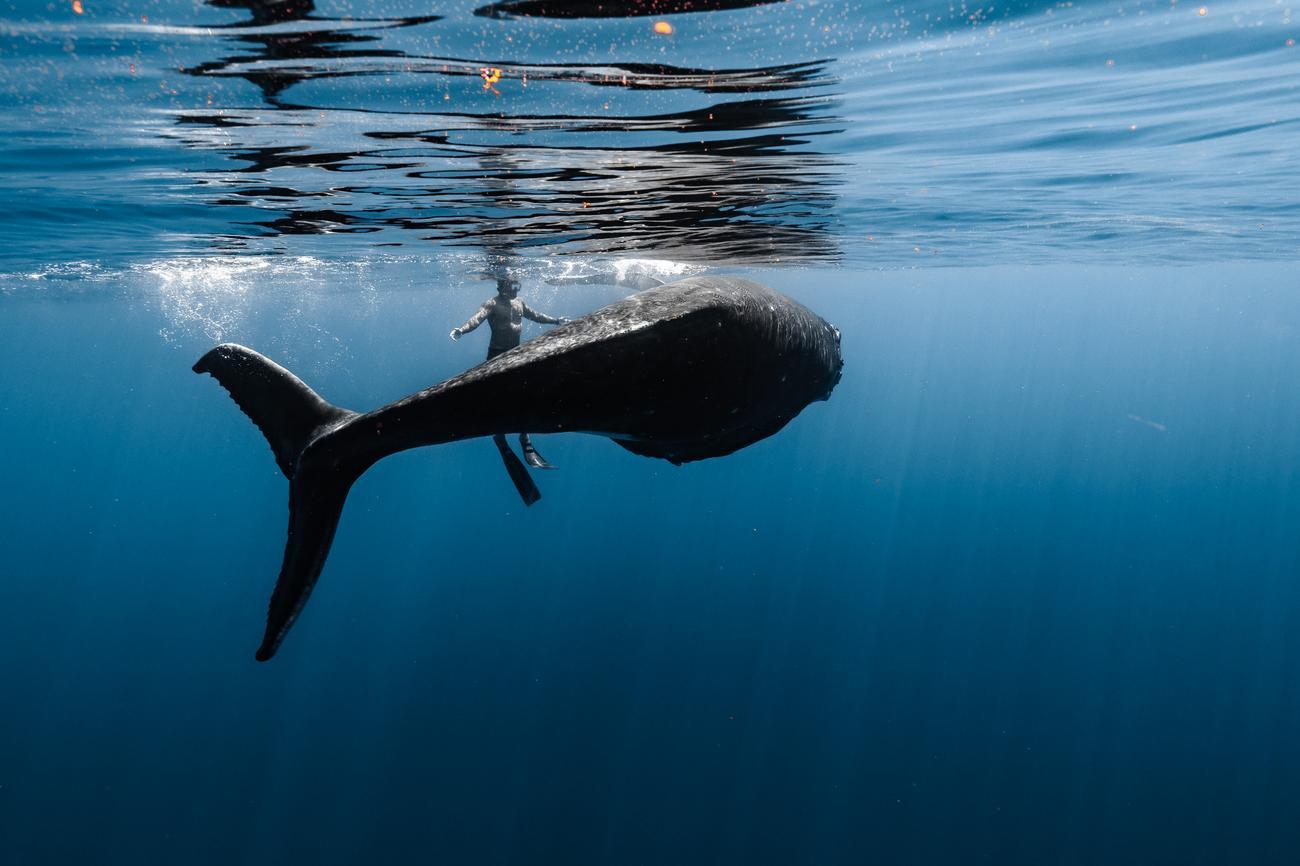
Experience the thrill of guided swimming in the open Pacific.
You depart at dawn from a northern bay, when the lagoon reflects cloudless violet. The captain cuts the engine two kilometers offshore and lowers a hydrophone. Through the speaker comes a rhythmic moan—humpback song, maybe 400 meters east. You don fins and mask while the crew scans the surface.
A blow erupts 50 meters ahead: a columnar mist catching first light. The captain repositions the boat parallel to the whale's trajectory, never crossing its path.
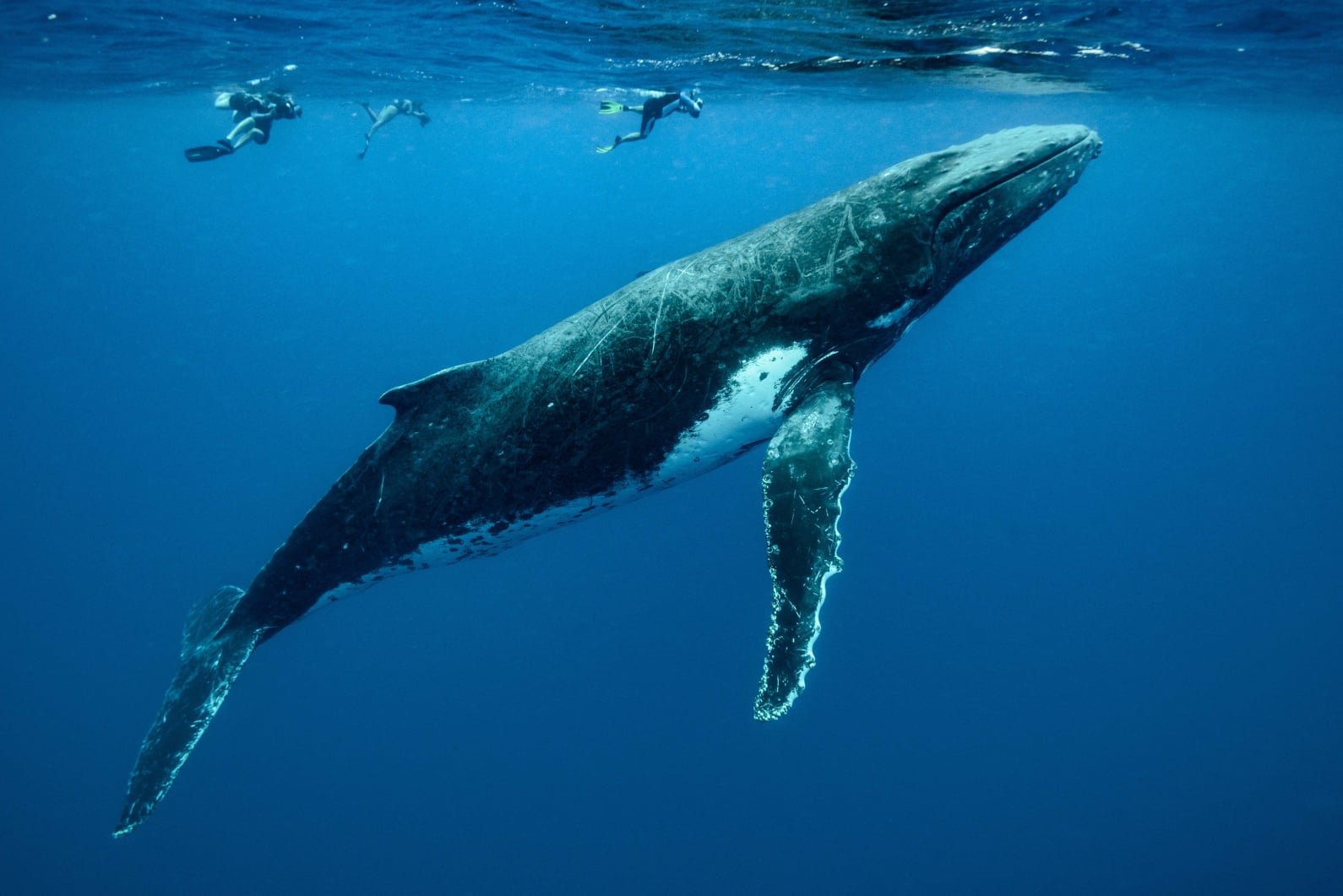
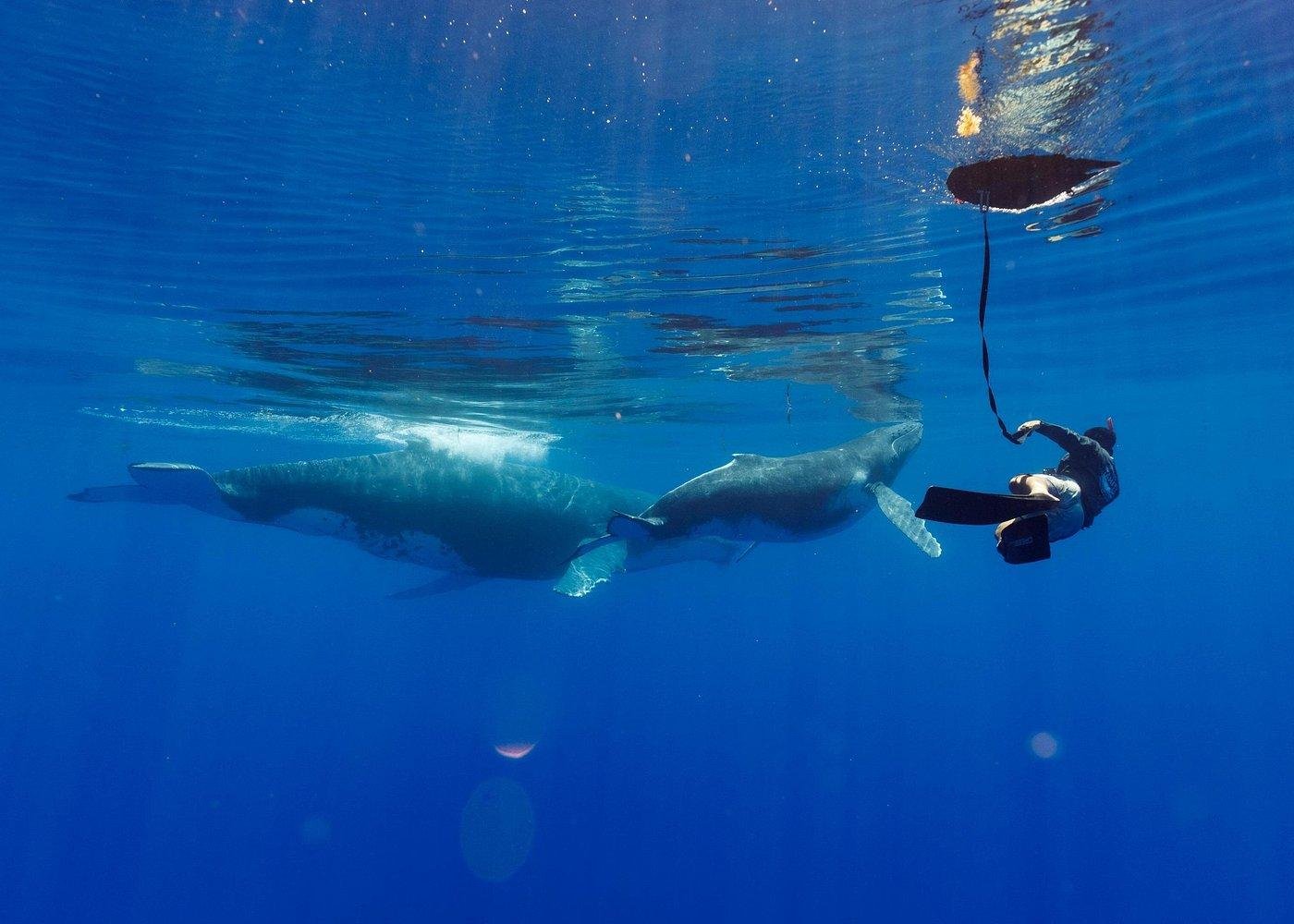
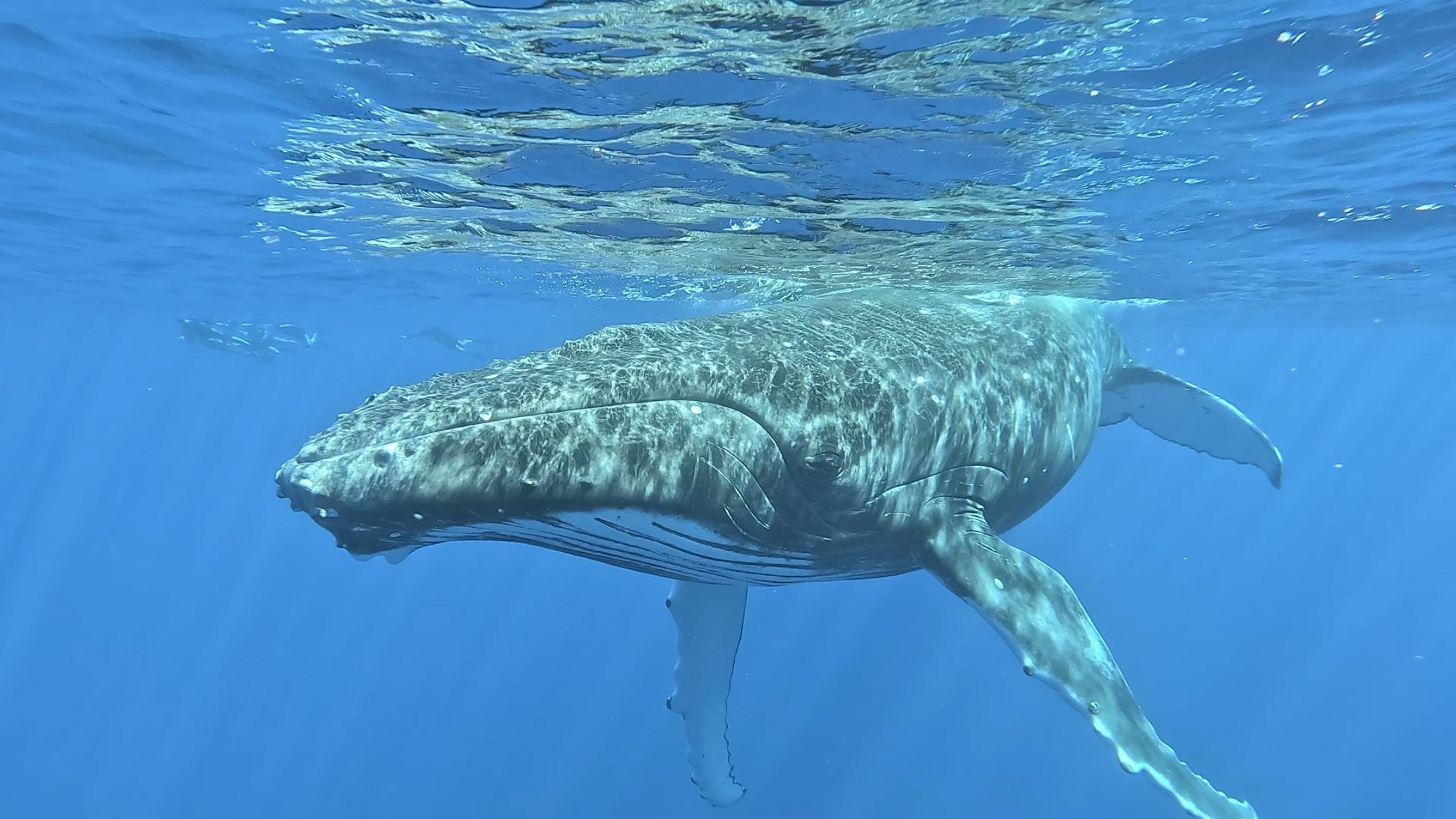
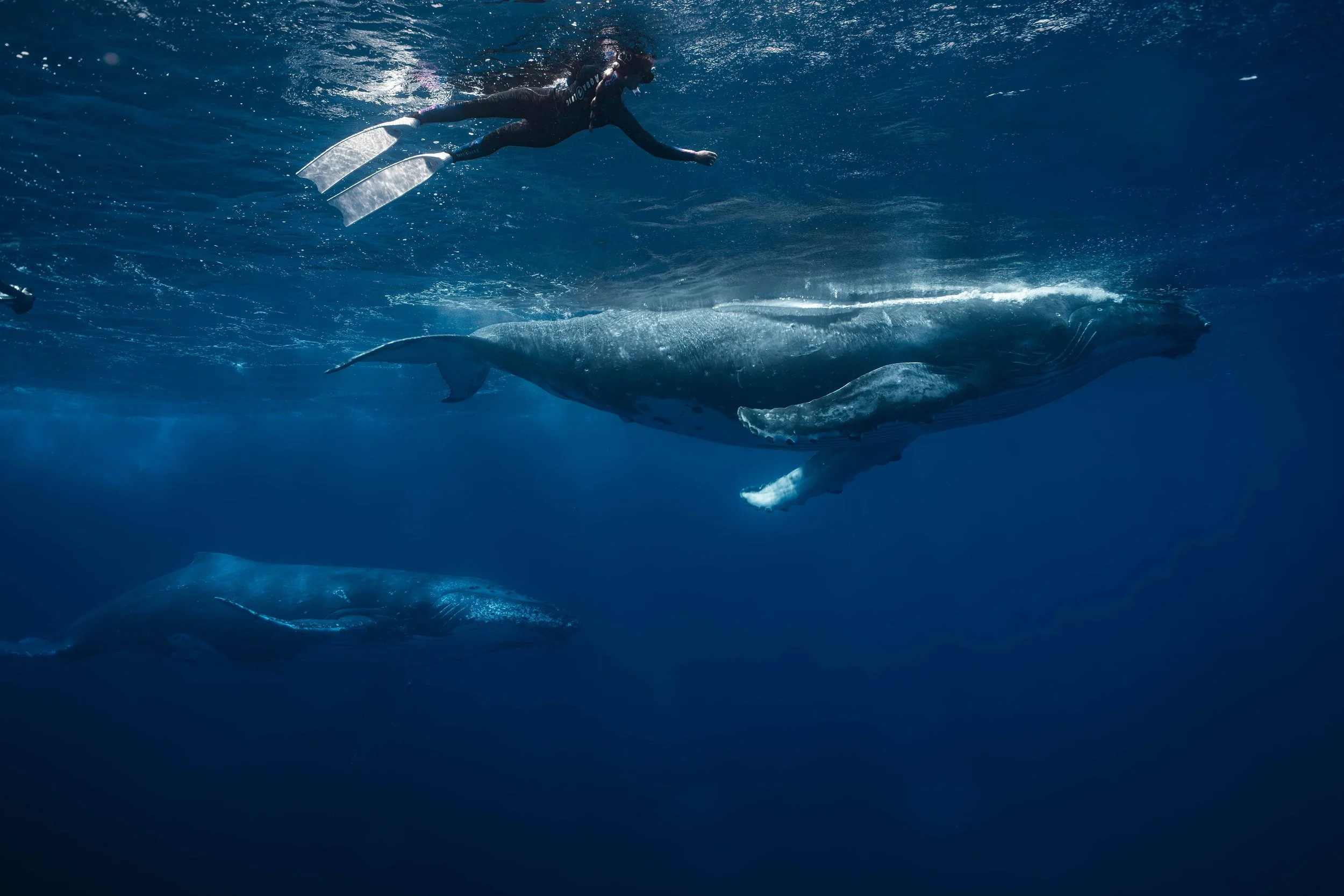
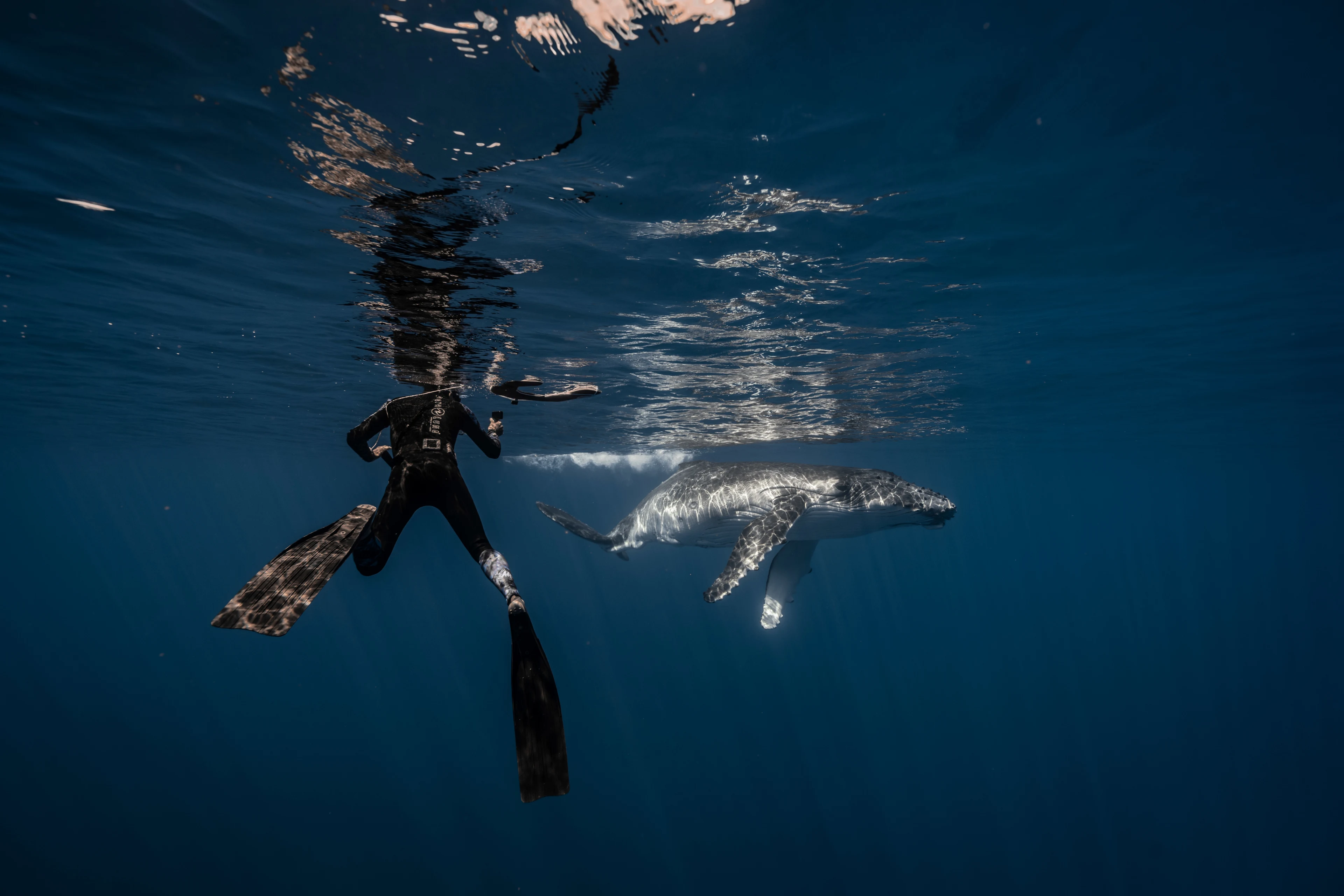
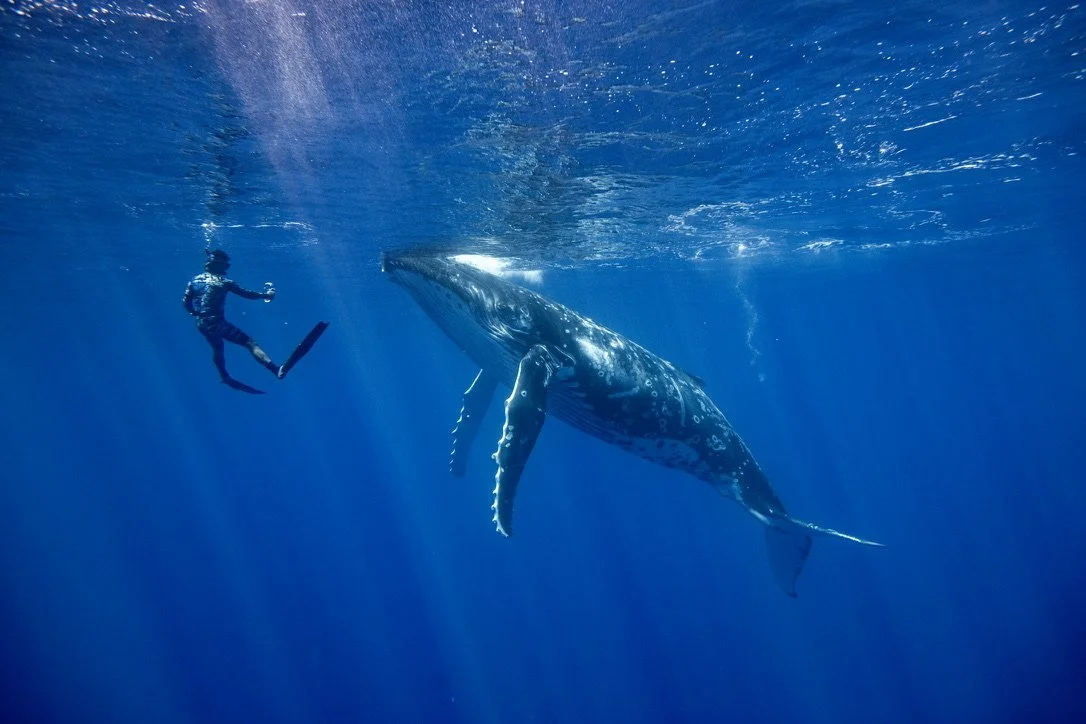
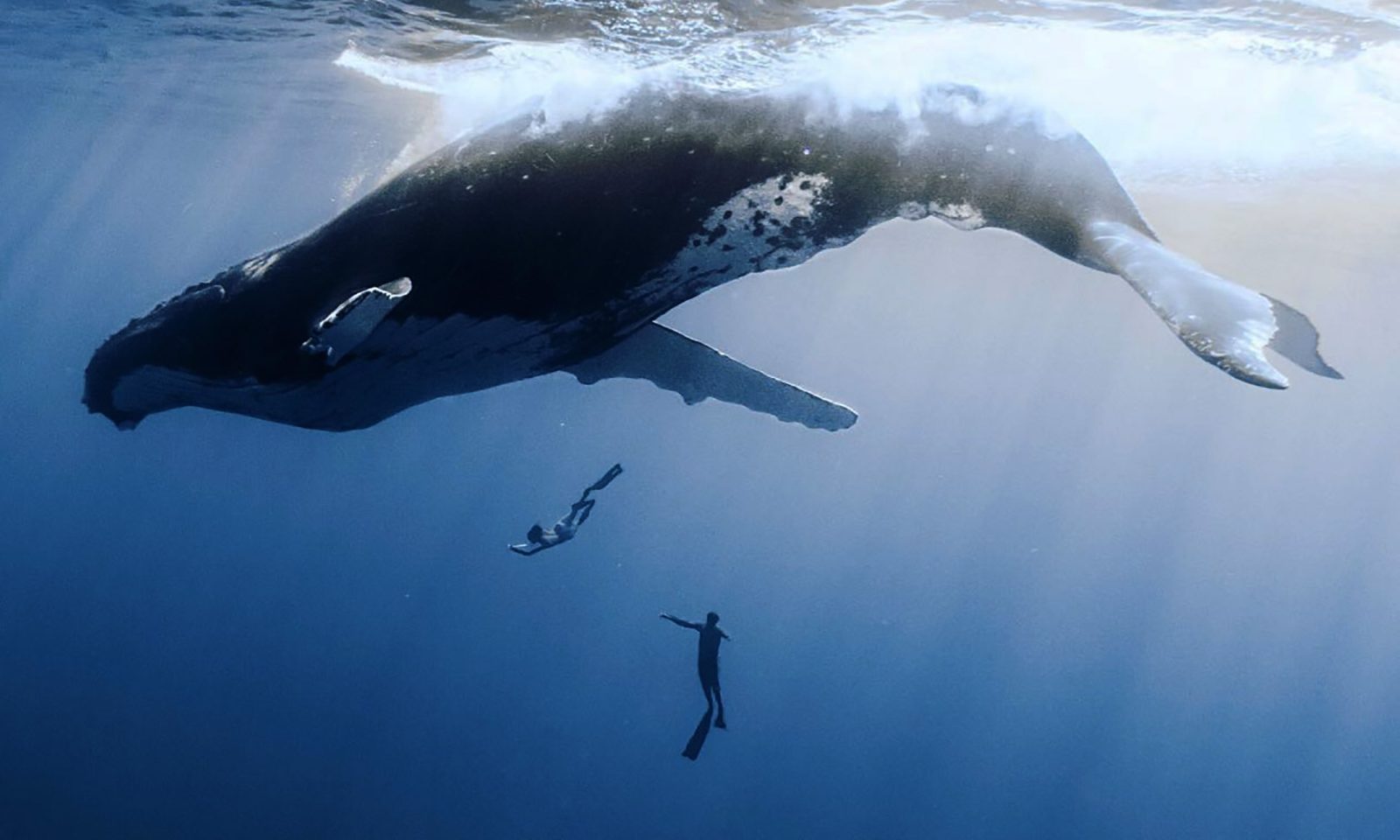
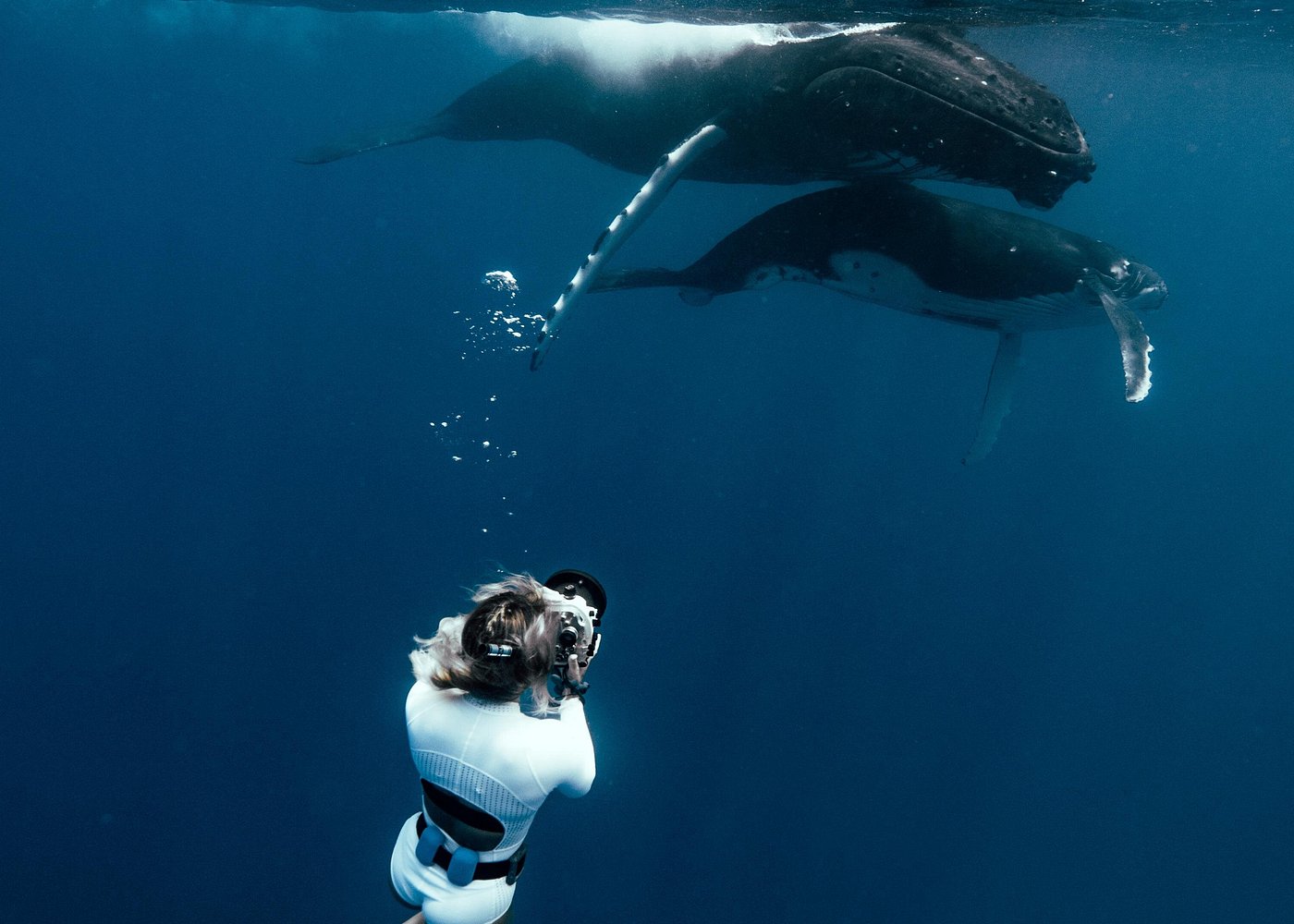
You slip into water that registers 26 degrees Celsius, descending three meters to neutral buoyancy. Visibility extends 30 meters in the offshore channel. A shape materializes from the blue—an adult female, 13 meters long, gliding at one knot. Her calf, pale gray and still creased from the womb, hovers beneath her pectoral fin. You hold position as they approach, the mother's eye rotating to study you. Sound intensifies: groans, clicks, percussive tail thuds from a male singing 200 meters below. The calf breaks away, rising toward you in slow spirals, curious but cautious. Your guide signals stillness. The whales pass within four meters, close enough to see barnacle clusters on the mother's chin and the calf's ventral pleats expanding with each breath. They descend, and you surface to equalize, pulse audible in your temples. The encounter lasts nine minutes—an exchange measured in breath, distance, and restraint.
All the details about your upcoming adventure in one place
Each austral winter, humpback whales abandon Antarctic feeding grounds and swim 6,000 kilometers north to calve in French Polynesia's warm lagoons. Moorea becomes a nursery corridor from July through October, when mothers guide newborn calves through the island's protected bays.
The volcanic shelf drops sharply just beyond the barrier reef, creating deep-water channels where whales rest, breach, and teach their young to breach. French Polynesian law permits in-water observation under strict protocols: swimmers must remain at least three meters from adults, five meters from calves, and approach only when whales display calm, investigative behavior.
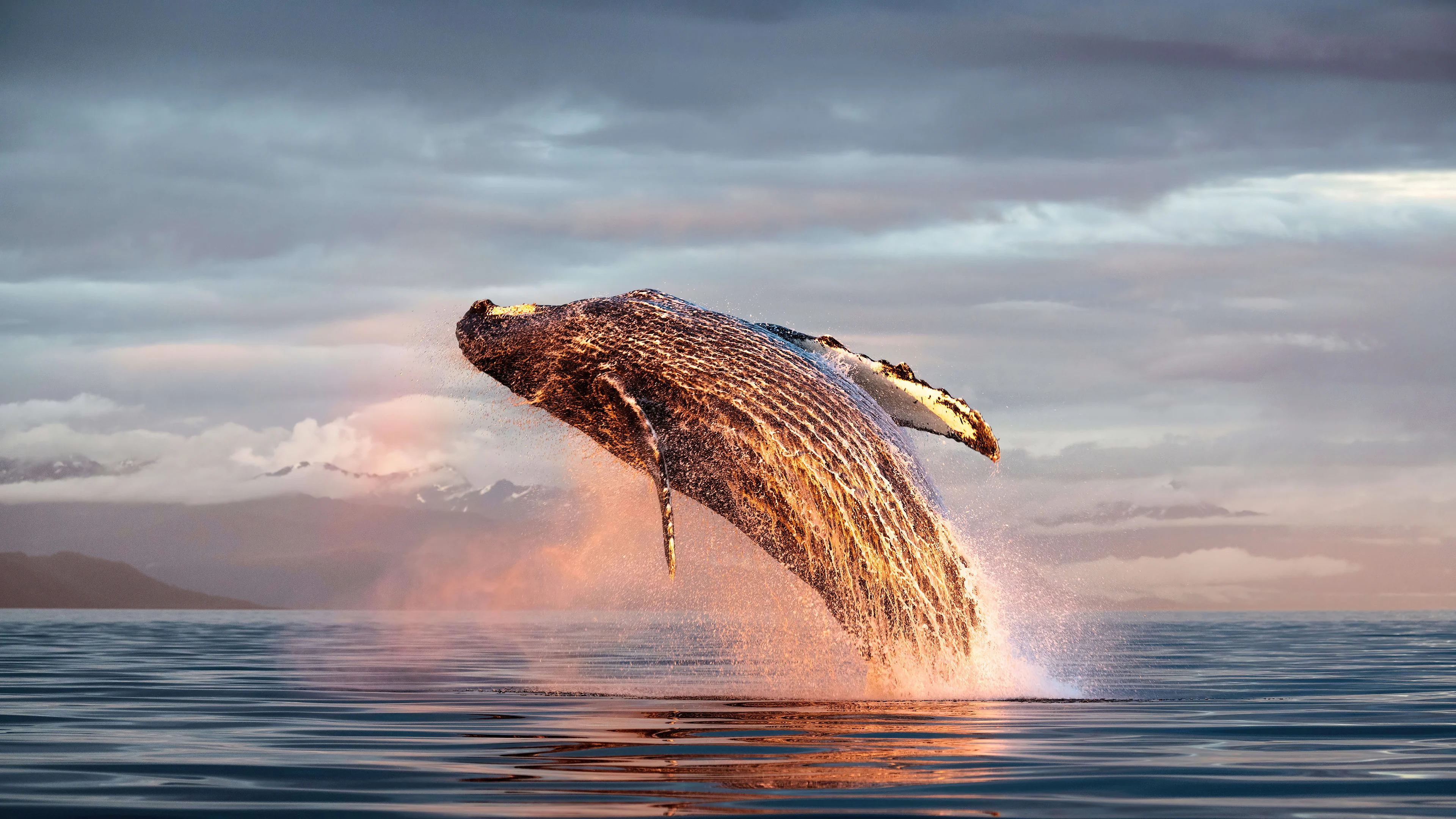
Moorea snorkeling with humpback whales differs fundamentally from boat-based observation. Underwater, whale song travels four times faster than in air—low-frequency pulses you feel in your sternum before you hear them. Males sing complex phrases lasting up to twenty minutes, advertising fitness to females and establishing territory. Calves, born at four meters and 1,500 kilograms, gain 45 kilograms daily on milk that is 50 percent fat. Guides read surface behavior to predict whale movement: pectoral fin slaps signal curiosity, tail lobs indicate agitation, and spy-hops—vertical head rises—suggest active environmental scanning.
The island's whale swim operators work within a permitted quota system limiting daily encounters to preserve animal welfare. Tours depart from Moorea's northern bays between 7:00 AM and 5:45 PM, prioritizing early morning when sea conditions flatten and whale activity peaks. Hydrophones mounted on boat hulls detect song at distances exceeding three kilometers, allowing captains to position vessels without pursuit. Once a whale group is located, swimmers enter the water in small groups—typically four to six participants—allowing close observation without crowding. Snorkeling with humpback whales in Moorea operates under marine biologist supervision, with guides trained to identify stress signals and abort encounters when whales show disinterest.
Cetacean tourism here follows a conservation model developed after UNESCO designated French Polynesia a whale sanctuary in 2002. Revenue from controlled whale swim programs funds marine research and anti-collision initiatives that protect migratory routes. The humpback population visiting Moorea has grown 7 percent annually since 2010, a recovery attributed to strict permitting, engine-off protocols, and seasonal fishing restrictions in calving zones.

Underwater, whale song travels four times faster than in air—low-frequency pulses you feel in your sternum before you hear them.
Wear swimwear, a rash guard for sun protection, and consider a light jacket for the boat ride. Reef-safe sunscreen is mandatory to protect the marine ecosystem.
Keep belongings minimal as space on small vessels is limited. Secure items in a dry bag to prevent water damage during your moorea snorkeling with humpback whales excursion.
Underwater cameras are permitted, but flash photography is strictly prohibited when near whales. Respect the distance requirements of your guide to capture moorea snorkeling with humpback whales content safely.
Children must be comfortable swimming in the open ocean to participate. Age restrictions are enforced by most operators to ensure safety.
Tour operators vary in their ability to accommodate passengers with limited mobility. Always verify boat boarding requirements before booking your moorea snorkeling with humpback whales tour.
Most operators provide water and light snacks, but you may bring your own non-alcoholic beverages in reusable bottles. Do not leave any trash behind in the marine environment.
Opening Hours
07:00–17:45
Address
Moorea, French Polynesia
Accessibility
Vessel-dependent; check with your specific operator regarding mobility requirements.
Arrival Window
07:00–09:45
Activity Type
Public ocean activity; tour operator fees apply.
Car · Taxi · Taxis serve major hotels and the ferry terminal.
Rental cars are available at the ferry dock and airport. Parking is available at major marina hubs.
Cancellations made at least 48 hours in advance are eligible for a full refund of operator fees. Entry to the ocean itself carries a 0 XPF fee.
Recommended time
Half a day
Most participants dedicate four to six hours to moorea snorkeling with humpback whales, allowing sufficient time for boat transit and marine mammal observation. Early departures are essential as the best arrival window is 07:00–09:45, ensuring calm sea conditions for your ocean excursion. While moorea snorkeling with humpback whales tours typically operate within established operator schedules, actual time spent in the water depends on whale activity and safety assessments. Securing moorea snorkeling with humpback whales tickets in advance helps manage expectations, though weather often dictates the final duration of these aquatic expeditions.
Crowd levels through the day
Weather · crowds · average price — dots go green to amber to red as each metric rises.
Peak season for humpback whale presence in French Polynesia. Sea conditions are generally favorable during these months for moorea snorkeling with humpback whales.
Listen to your guide for signals to enter the water quietly to avoid startling the whales.
Humpback whales have migrated through French Polynesian waters for millennia, but moorea snorkeling with humpback whales as a commercial activity emerged only in the early 2000s. The catalyst arrived in 2002 when the territorial government created the Polynesian Marine Mammal Sanctuary, encompassing 5.5 million square kilometers of ocean. This designation prohibited commercial whaling and harassment but allowed carefully regulated observation. Moorea's shallow bays and close proximity to deep channels made it ideal for encounters. Tour operators began experimenting with in-water programs around 2004, adapting dolphin-watching protocols to the larger cetaceans. The turning point came in 2006 when French Polynesia's environmental ministry issued the first formal guidelines for whale swimming. Operators could not approach within 100 meters by boat, swimmers had to remain at the surface, and groups were capped at four participants per guide. Violations drew steep fines. Early moorea snorkeling with humpback whales tours faced criticism from marine biologists who warned that unregulated tourism could disrupt breeding behavior. A 2008 incident in which a motorboat struck a calf near Opunohu Bay triggered emergency consultations. Authorities tightened enforcement and required all guides to complete whale-behavior certification. By 2012, Moorea hosted roughly a dozen licensed operators, each adhering to seasonal closure periods and daily encounter limits. The humpback migration window—July through November—became the island's secondary tourism peak after the dry season. Today the activity operates under the same sanctuary framework established two decades ago. Whale populations in the region have remained stable, with approximately 2,000 individuals returning annually to breed and calve in warm tropical waters.
French Polynesia establishes the Marine Mammal Sanctuary, banning commercial whaling across territorial waters.
First experimental whale swimming tours launch in Moorea, adapting dolphin encounter protocols.
Ministry issues formal in-water guidelines, limiting group size and mandating 100-meter boat approach distance.
Boat-calf collision near Opunohu Bay prompts stricter enforcement and mandatory guide certification.
Moorea licenses approximately twelve operators under unified seasonal and daily encounter caps.
Activity stabilizes with consistent humpback return rates and enforcement of two-decade-old sanctuary rules.
Position your camera at the water level from your boat as you scan the horizon for whale breaches or dorsal fins. This area provides a dramatic backdrop of lush volcanic peaks for your moorea snorkeling with humpback whales captures.
Capture the transition from shallow turquoise lagoon water to the deep blue drop-off where marine life gathers. This location is frequently visited during moorea snorkeling with humpback whales tours when whales move closer to the barrier reef.
Shoot toward the open ocean through the reef pass to frame whales in their natural migration corridor. Ensure your housing is secure for high-speed action photography during your moorea snorkeling with humpback whales tour.
Frame the iconic jagged mountains rising directly from the sea while waiting for surface intervals. It serves as a classic landscape setting for those holding moorea snorkeling with humpback whales tickets and waiting for cetacean sightings.
Embarking on moorea snorkeling with humpback whales requires significant swimming stamina, as these open-ocean encounters differ greatly from calm lagoon excursions. Parents should prepare for deep-water logistics that demand high confidence in the water from all participants.
Younger children must be strong swimmers, as they will be required to enter the open ocean away from the safety of shallow reef areas. Parents should verify their child's comfort level with snorkeling gear and deep water before booking moorea snorkeling with humpback whales tours.
The activity involves boarding a boat and frequent entries into the sea, which can be physically taxing for smaller children. Ensure your family is prepared for a half-day outing on the water when considering moorea snorkeling with humpback whales tickets.
Most operators provide masks and fins, but bringing child-sized snorkeling gear ensures a better fit and reduces the likelihood of water leakage. Having reliable equipment is essential for families participating in a moorea snorkeling with humpback whales tour to maintain visibility during whale sightings.
Aim to arrive during the best arrival window of 07:00–09:45 to ensure calm sea conditions, which are safer and more manageable for children. The ocean environment at the Moorea address can become choppy later in the day, making early morning departures the most suitable choice for families.
After completing your moorea snorkeling with humpback whales excursion, you will find several dining choices near the main boat docks in Vaiare and Maharepa. These establishments cater specifically to guests returning from a marine wildlife expedition who are looking for a quick, post-activity meal.
This popular spot offers fresh poisson cru and burgers, making it a reliable choice after your moorea snorkeling with humpback whales tour. It is conveniently located near the primary docks where marine mammal excursions typically conclude.
Known for its relaxed atmosphere and savory crepes, this café provides a perfect setting to discuss your recent encounter with humpback whales. The service is efficient for those who have secured their moorea snorkeling with humpback whales tickets and have a busy afternoon ahead.
This casual outdoor grill serves hearty portions of grilled fish and steak, offering excellent value for hungry explorers. It is a favored stop for travelers returning from morning humpback whale swimming trips seeking a no-fuss lunch.
Everything you need to know for your journey
The activity is available daily from 07:00–17:45, though whale sightings are natural events.
Yes, booking your moorea snorkeling with humpback whales tickets early is recommended due to high demand in peak season.
The ocean has a 0 XPF entrance fee; tour prices cover vessel, crew, and expert guidance.
The best arrival window for moorea snorkeling with humpback whales is 07:00–09:45 for the calmest sea conditions.
Yes, you may bring your own gear, though most operators provide high-quality snorkeling equipment.
Age requirements vary by operator; confirm their specific policy before booking your moorea snorkeling with humpback whales tour.
Tours may be rescheduled or canceled for safety; check your operator's cancellation policy.
You can easily combine your trip with visits to the Belvedere Lookout or local beaches in Moorea.
Wear swimwear, a rash guard for sun protection, and a light jacket for the boat ride.
Group sizes vary, so inquire with your chosen provider to ensure a comfortable experience.
High elevation point offering panoramic views of Cook's Bay and Opunohu Bay.
Beachfront resort with overwater bungalows.
Join thousands of happy travelers who have discovered this incredible experience
Book Your Experience Now